$$PLAIN_TEXT_PREVIEW$$

XTANT Nomad 2026

Picture by Yuki Sugiura


In Review | 18.01.26

Our Workshops…

Madrid Design week is in full swing and, as Kavita is participating, we’ve all managed to fall into it one way or another. Key to the installation is the notion of ‘Relevo generacional’ How these Spanish artisan traditions are defined by the passing of the torch from the past to future generations.

If the Community and its market is XTANT’s first load-bearing pillar, education is its second.

It is almost impossible to transcribe the experience of a class. You can summarise its contents and describe its methodology but the indents, the pauses, the personal interactions or the way we inflect or stress certain words is entirely lost on the video or the page.

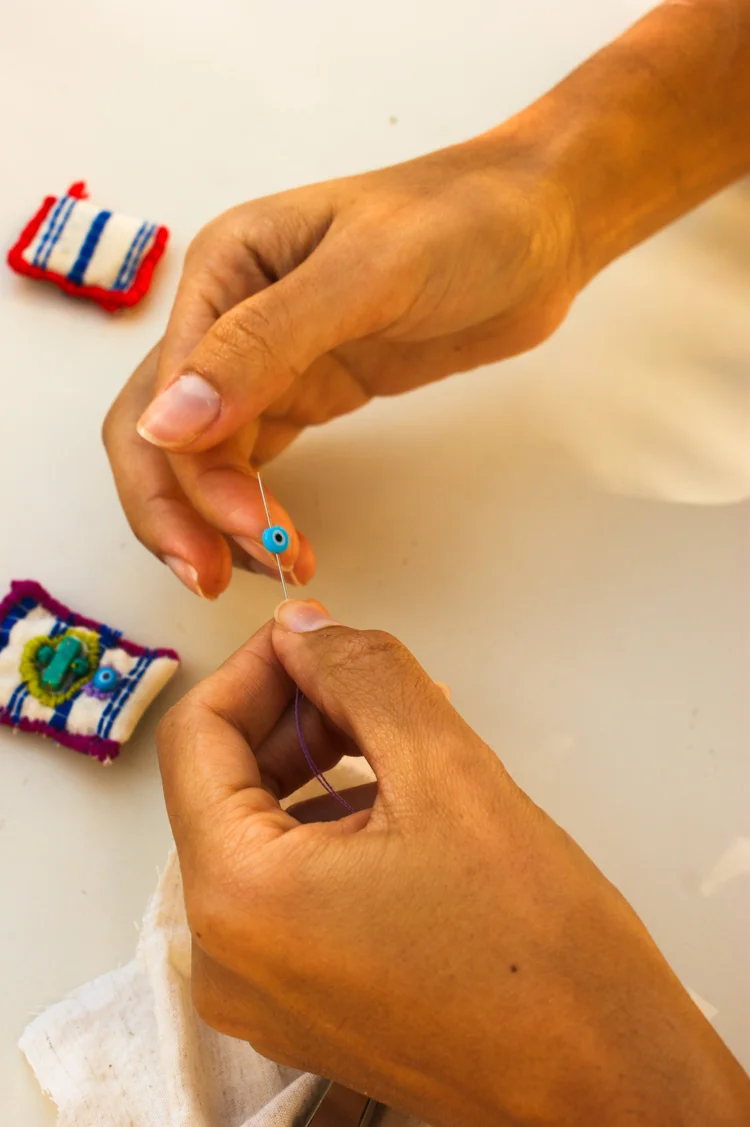
“Tie the knot at its end.” But how far? Do you leave a small gap? If so, how long? etc…


Photo from Danae Grim’s Workshop.

In the absence of a teacher to elaborate, the self-taught student is forced to both learn the written content, as well as the intention and correct interpretation of the words as they are written. If you’ve ever taught yourself anything, you know for a fact just how devastating misunderstanding someone's instruction can be when they’re not there to correct you.

But in cultural traditions the value of the teacher is two-fold, because as the interaction teaches you the way to interpret its instructions it also (hopefully) gives you the context or reasons behind the practice itself.

The existence of this living form of storytelling; the transmitting of its history from master to student, and the student’s alterations as they apply it into their modern contexts is what ultimately separates living artisan traditions, from unchanging historical recreations or ‘generic’ arts & crafts projects.

These are the meanings that convert ‘stitchwork’ into sashiko, or block-printing with silver into ‘Chandi vark’ work’

In the continuity between a crafts history and its present lies the thing we call ‘artisanry’

So, as we draw ever nearer to the intensity of the set up months, we wanted to showcase a small window into the context of a few of the workshops present this year:

Protective Knot “Tobsho” Buttons with Surzhana Radnaeva

€150.00

 Shop 

1. “Tobsho”

Across the Taiga forests of the North Asian far east, surrounding the often frozen coast of the deepest fresh water lake on earth, live the Buryat people. Relatives to the Mongol, they are an indigenous people grounded in the region for at least one thousand years. With its ancestors stretching far prior.

Knot buttons, common to ancient North Asia generally enter the imagination in Europe mainly from a Chinese influence during the heyday of Orientalism when east asia was still subjugated by a committee of European empires. Qipao, Manchurian jackets, and the sort.

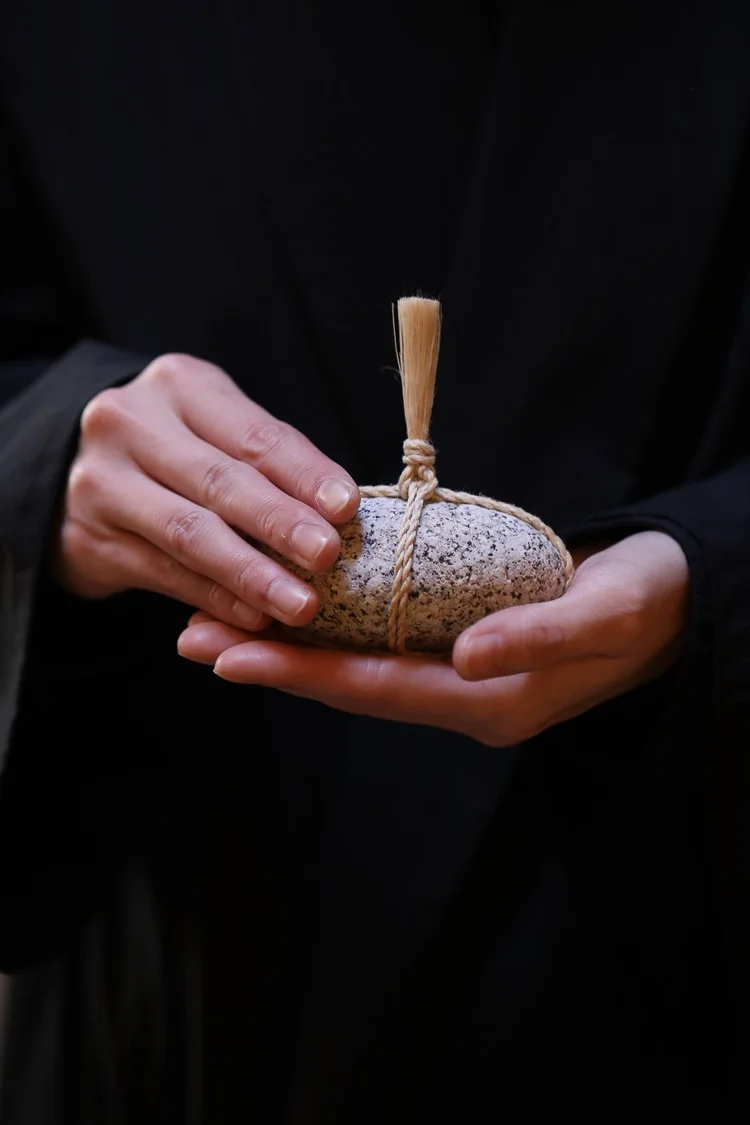
Photo of Wara_japan by @leyre.lopezdelapaz


But just north west of them, born out of similar traditions but a different nomadic lifestyle the Buryat people adorned and fastened their clothes with these protective knots, often less ornate than southern counterparts, they were made to weather the practical challenges they faced as they marched on the beat of the unforgiving seasons of Siberia.

Suzhana, born in buryatia has imbued her works with aspects and symbols of her culture, taking them across the world, blending them with new textures and painstaking natural dying in an aesthetic mix of the past and the present.

Echoes of Silver : Real Silver Block-Printing Workshop

€150.00

 Shop 

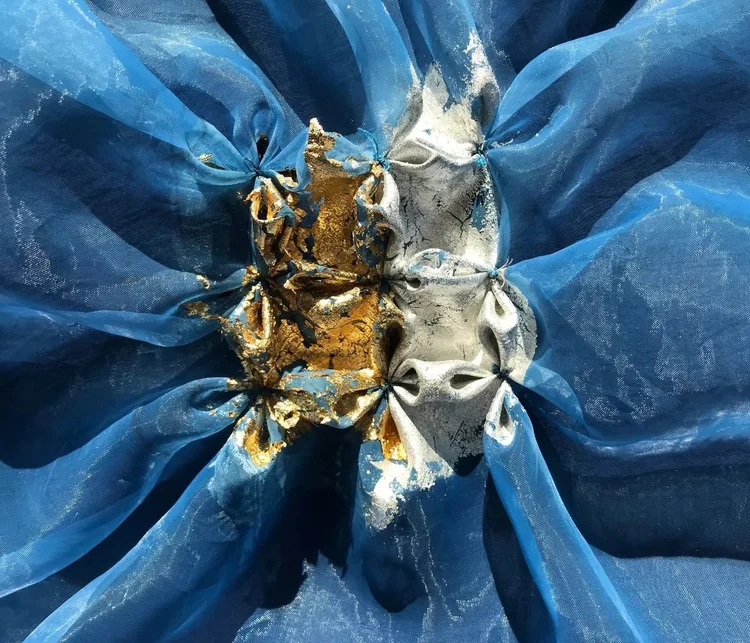
Photo by Begrims


2. Silver Block-Printing

Originating in the 1500s concurrent with the unification of North India under the Mughal empire was born Chandi vark.

An art of silver block printing onto fabric, it was used by a whole host of artisans at the time in their commissions to nobility and royalty. Found as decorative patterns and frills of the clothes of the then powerful of the continent.

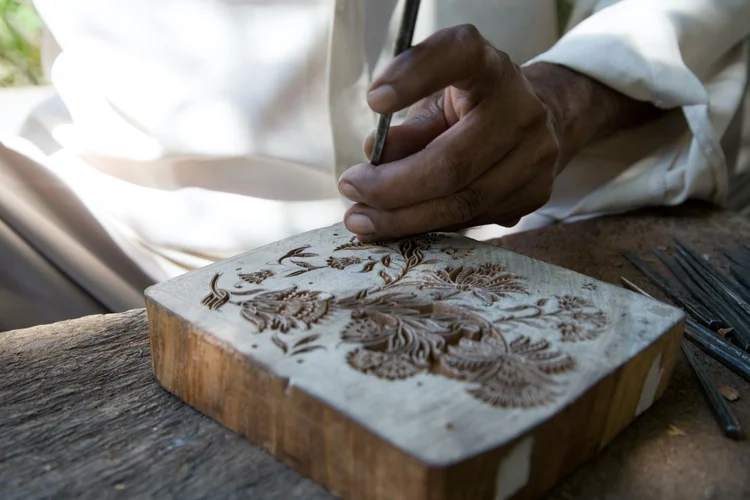
Intricate patterns carved into brass blocks are stamped with real gold or silver sheets pressed into paper, silk, or cotton in floral patterns or royal iconography.

Yet despite its gilded status and skill in production, the practice slowly but surely declined through the centuries of British rule to the point where today only a scant few artisans still keep the tradition alive.

Among them is October. Where Pragya has taken up the mantle of working in this tradition into modern fashion, and to pass it on to as many people as she needs to, so that it may continue.

Hand Block being carved. Photo by Kashmir loom


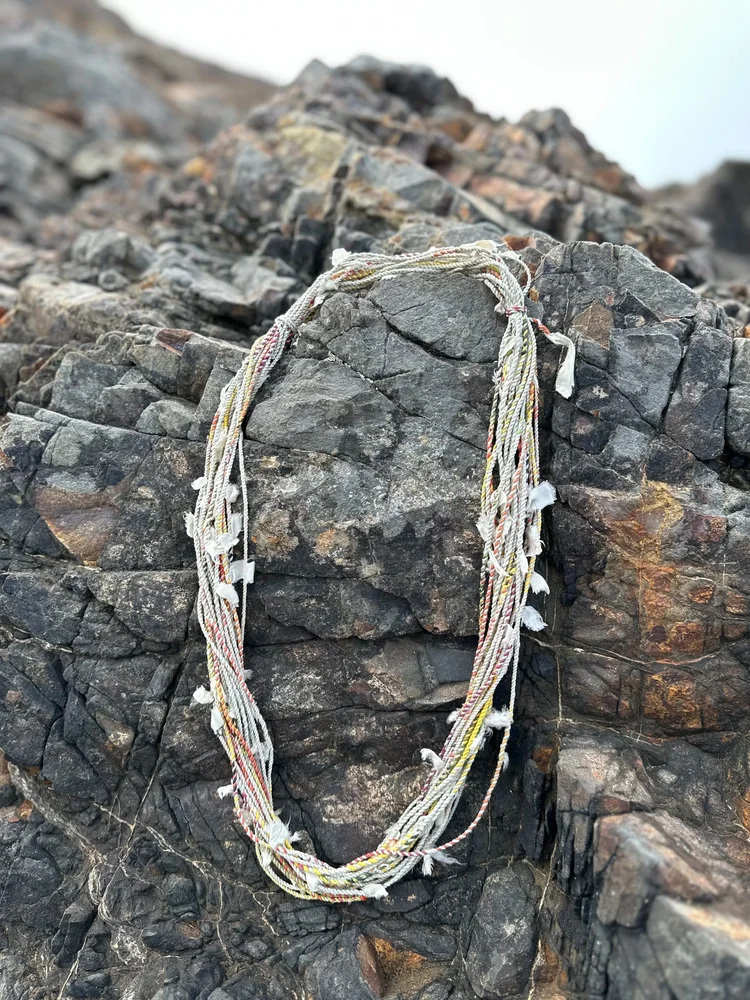
3. Cordage

Sat beside our workshops dealing with adorned embroidery or boro patchwork, is the oldest and most important textile practice of all. Cordage.

Precursor to almost all fashion, cordage, in adornment, travel, logistics, and ritual has been a fixture in day to day life since human beings ever started to produce textile, tens of thousands of years ago. A technology so fundamental to civilization that it’s hard to even think of it as a technology at all.

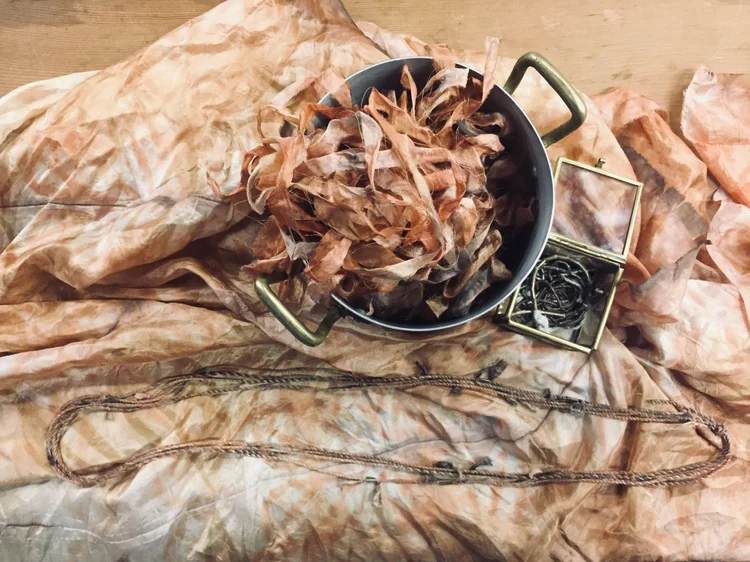
But in the world of textiles, much like weaving, it is pushed to the side and considered a lot less than embroidery and stitching. Two practices that in Europe are themselves being slowly relegated to hobby territory. Being a building block of textiles themselves, Saoirse has worked with wild fibre plants, beautiful silks, old rugs, and all sorts of fabric waste.

Sitting as necklaces, decorations or flourishes on scarves and handkerchiefs, her work attempts to re-connect the artistic with this oldest form of craft.

In Connection: The Ancient Art of Hand Twined Cords with Saoirse Byrne.

€150.00

 Shop 

The selection is not yet completely finalised and there is also a lot to say (and a lot we’ve said elsewhere) about the workshops we didn’t get to highlight here. But we sincerely hope that you’ve seen a craft you’re interested in.

Photos by Saoirse Byrne


In recent memory Handcraft has never been as important. A sudden LLM/technology-induced high has led a lot of very smart people to openly declare that, in the future, the labour of design and art will too be entirely automated.

As the software engineers and tech investors of the world sound their alarms, part as covert sales pitch, part as nihilism, they belie a complete inability to think of the structures of the future as anything meaningfully different from those of the present.

This extremely narrow, hyper-profit seeking, hyper cost-cutting, casino-esque version of the capitalist economy that we’ve only really had for about 50 years.

They say that Armageddon is coming and that all jobs will be vaporised because that kind of ruthlessness, born in the wall-street stock exchange and raised in silicon valley, is the only way to organise a society that they’ve ever known.

This idea is at best an overestimation of how much things will change and at worst merely a consequence of the current economy’s priorities. Art and human labour is something people have continued to participate in even in the worst crises and even in their own free time. People, especially today in our era of para-sociality, seek the human stories behind everything they live with.

The bread from the local baker, the coffee from the guy in the street below, the outfit made by a community you’re a part of from an artist you follow feel all the more complete than the nameless brand products which bashfully conceal their labourers.

Catching on to this, luxury brand fashion has already moved to try and capture the image of being ‘artisanal’ or ‘authentic’ and while it might be too little too late, the fact that it feels the need to pretend at all is a sign of the times.

It is now the time for us to make everything else follow suit.

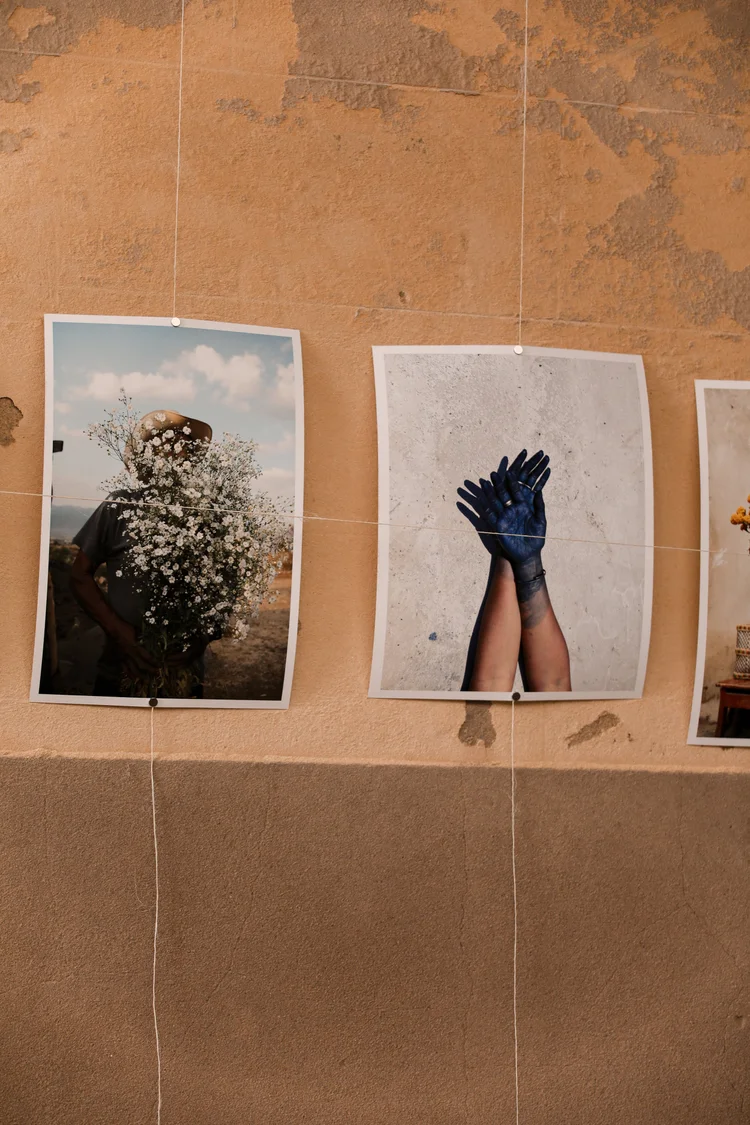
Luvia Lazo´s exposition at XTANT 2023 by @leyrelopezdelapaz


Interested in a workshop and also want to support us? Consider the VIP PATRON PASS! All patrons and the plus one they might bring are invited to the opening night party on the 8th.


XTANT, Calle Sanchez Pacheco 47, Callejon Local 1, Madrid, 28002, Spain

Unsubscribe