$$PLAIN_TEXT_PREVIEW$$

XTANT Nomad 2026

Picture by @luvialazo


In Review | 15.01.26

‘Work’ (derogatory)…

We keep up to date with the news here, despite our better judgement. And every once in a while in our neck of the woods you’ll hear a few rumblings about a future of AI in Fashion.

Now we’re not about to go all luddite here, but as we read the thoughts of people that were understandably concerned about the future place of designers and whether the human artistry was going to be taken from fashion design entirely we couldn’t help but think.

“Haven’t we been here before?”

Weaving, dyeing, dye making, spinning: All these processes that once were closely in conversation with each other, that informed changes in how each piece of clothing would turn out as it was being made, were entirely “de-artified” throughout the past century and a half.

The production of raw materials for making clothes was divided into an ever larger amount of small tasks, all disconnected from each other and shut out from the realm of “Fashion”.

Polyester fibre from wherever, blue dye from who cares, pattern cutting by some automated machine from some other country. Rather than working with the materials of an area or the skills of its people, allowing for them to alter and inform your work, now you’d shop around for an area or people that would execute your vision at the cheapest market price. The craftsmanship behind fashion being left as nothing more than an expendable resource.

In fashion, ‘art’ became a thing of the designer, and the maker became his tool.

Artist @reginadejimenez at work in her studio.


It feels as though manual labour is perceived with a double character.

On one hand it was historically seen as something dirty, for the illiterate or the “unambitious” masses to the eyes of the emerging middle class in 19th century Europe. Then, it became something foreign, work that was almost exclusively for the exploited peoples of the “third world” whose plight we in Europe may or may not have something to do with.

Perceptions around what a dignified career was or even whether something even counts as a “real career” became inextricably tied to the salary that skillset provided. For the days when high-school and college educated people were scarce, that was office work. The office workers of the time became the ‘middle class’, a position firmly below high society, but just sufficiently better than the lowest rungs of labour — sweatshop employees and agricultural workers — to give people a sense of superiority.

Shepherd shearing wool by hand. Photo from Atelier Talasin


In our industry traces of this stigma run deep, as the would-be craftspeople — weavers, dye-makers, sheep herdsmen, cotton farmers, embroiderers — are constantly replaced or relegated to dark corners so that the brand or at best the collection’s designer may keep the spotlight.

Intermediaries that once made a killing by subcontracting random factories to large corporations, now offer the same service online to any designer or small company that doesn’t have the funds for setting up their own production chain. Any person with a little bit of cash can print twenty or so graphic T-shirts and have no idea where they were printed at all.

In fashion, as in merchandise, plush-toy manufacturing, etc… We often make a concerted effort to hide away the actual production process behind the things that we design.

Wool-washing by hand. Photo from Atelier Talasin


But on the other hand manual labour was, and still is, seen as a kind of noble poverty. A way of life more connected to the land, less “alienated”, more humble and by virtue of that humility more “authentic”.

It might just be romanticisation of “the past” but there is something to it.

Every so often I hear about yet another person who has moved to the countryside from their office job, who has left it all in their cushy job to master an art they can make with their hands. Obviously the manual work isn’t what pulls most people into hobbies or jobs like these, it’s typically the opportunity to be artistic, to create for themselves. But that human character to the work is a thread in every one of these practices, the hours toiling to get the right shape, the experimentation.

It is the presence of that manual work, the faces behind it that gives the label ‘Artisan’ so much value. When someone is selling something handwoven or handmade, they will do everything in their power to let you know about it. We’re guilty of that ourselves.

But doesn’t that say a lot? That our mass produced brands are bashful in giving anything more than the address of a factory they're legally obliged to name, while artisan production will cherish, show off, and pin its value on the skill of its makers. Even if it sometimes ends up coming off as snobby or self important.

Natural dye house. Photo from @bhutan_textiles


Work can be grueling, so it’s not really a shock that many people will look at work that will tire you out both mentally and physically with skepticism or pity.

But that’s not because people are naturally lazy. The conditions, payment, and ways in which work happens for most are the issue. People will expend a great amount of effort pursuing their hobbies, improving skills, picking up an instrument, or mastering a craft for themselves or their business.

The process can often be more draining than any office job but they still choose to do it, even in their downtime, even at great personal expense.

Can’t say the same for their drive to do bank data entry.

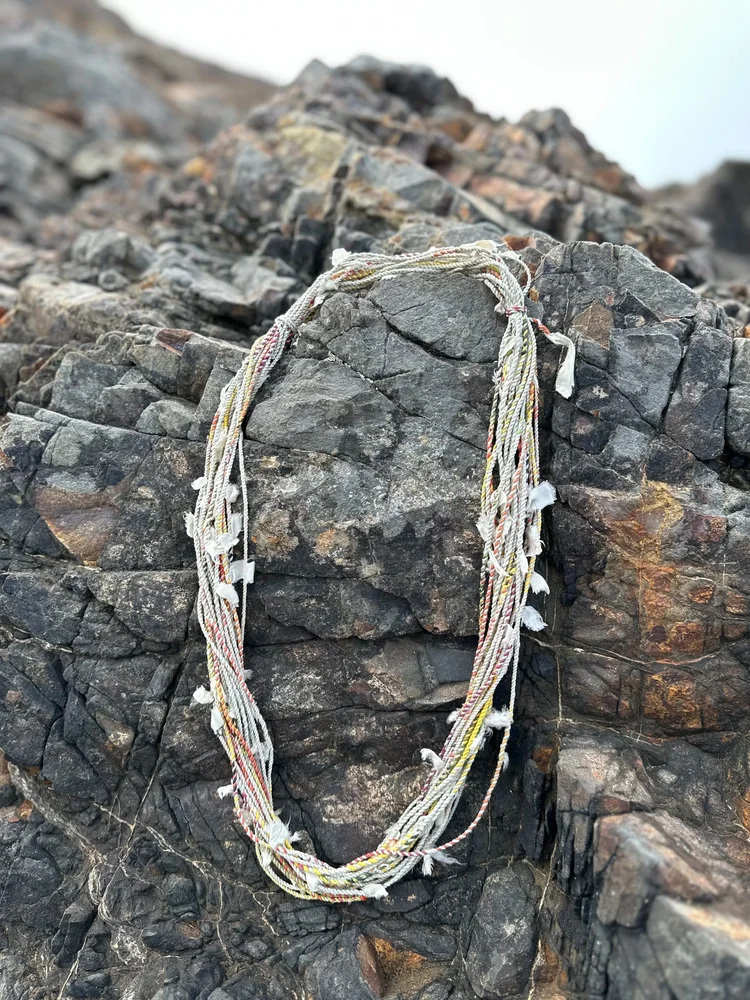
In Connection: The Ancient Art of Hand Twined Cords with Saoirse Byrne.

€150.00

 Shop 

A new workshop has been added!

Talking about working with our hands, cordage was one of the first crafts we taught ourselves in ancient times. Saoirse is a great teacher and an incredibly knowledgable practitioner. Give it a look!

Interested in a workshop and also want to support us? Do consider the VIP PATRON PASS. All patrons and the plus one they might bring are invited to the opening night party on the 8th.


XTANT, Calle Sanchez Pacheco 47, Callejon Local 1, Madrid, 28002, Spain

Unsubscribe