$$PLAIN_TEXT_PREVIEW$$

Watch the newest episode of our podcast!

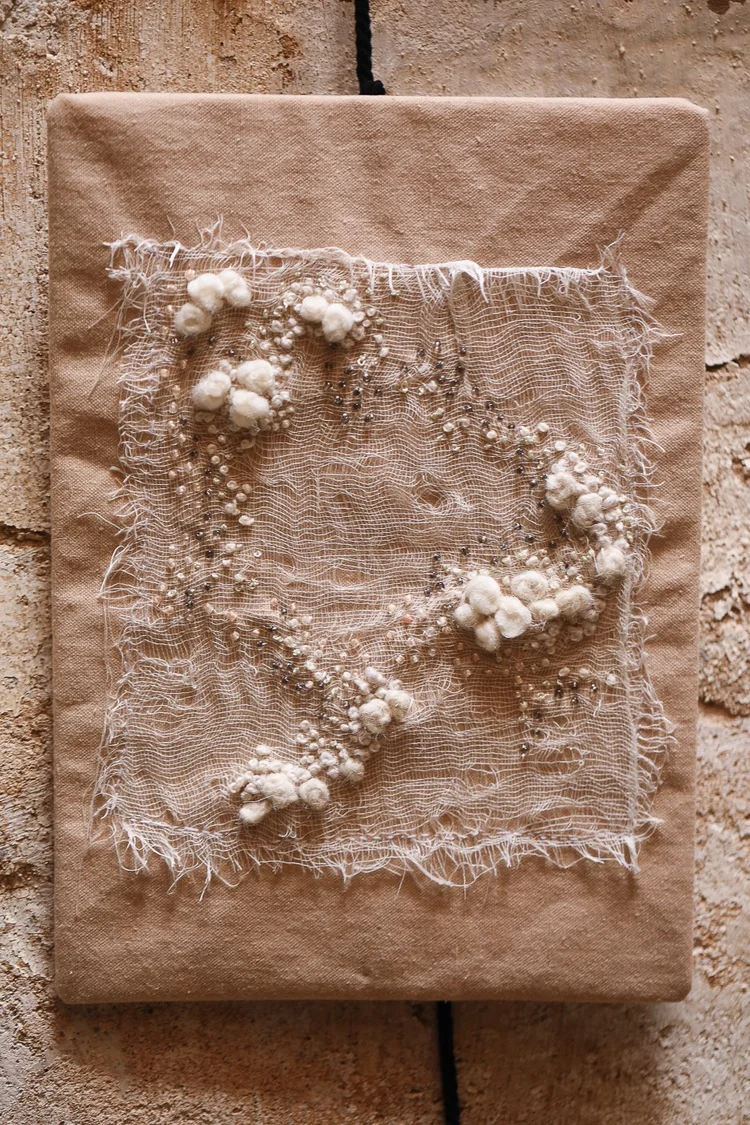
Wandering stitches workshop by @emmacassi_art


Miscellany | 20.11.25

Is Artisanry ‘Art’ or ‘Craft’?

FOUR workshops, already? We’ve really have learned to organise our timings a bit better.

In the midst of all the preparations and outreach in XTANT it’s hard not to begin noticing a few patterns. Matching stories between artists’ work, practices with faraway origins having hauntingly similar aesthetics, and the way we write about ourselves.

The stories that we tell through them, the symbols of their cultures and what those can tell us about said cultures. A kind of archaeology-lite has emerged dedicated to finding practices and arts of the past which we discarded in favour of industry, and creating value from them. Relishing in the “inefficient”, manual, and human aspect of the way they are made.

Picture by @engelengele


As part of the background research that we go through in organising XTANT, I’d gone looking through sources on Boro’s history. The team was familiar with sashiko conceptually but Boro, as something distinctively Japanese and separate from other patchwork repair traditions, was something we only knew on a surface level.

After scouring through vague online histories, old book recommendations, and a couple early 2000s articles, I eventually managed to get a hold a online word document for a 2021 PhD thesis: “Reviving Boro: The Transcultural Reconstruction of Japanese Patchwork” by Li Leren

Replete with investigations into historical source material, interviews with makers, gallerists, and enthusiasts and an in-depth explanation about how at the turn of the century museums and the modern art market, japanese and foreign, slowly pieced together a patchwork of different repair practices from all across Japan into the cohesive story of capital ‘B’ Boro.

I was intent to just skip to the history section, but I quickly found myself reading it cover to cover within the day. Writing down all the books and people she’d referenced throughout. It is genuinely fascinating work.

And in the midst of a section on non-cotton historical examples of boro and the general history of cotton in japan, as it described the monumental change that the addition of one train line brought to the north, with crate-loads of cotton fibre, my mind was stuck replaying the thousands of stories you hear today throughout Spain of the metric tonnes of wool discarded every year.

Scarcity really has ended.

Picture by @leyre.lopezdelapaz Artwork by @reginadejimenez


It’s said that quilting resurged in popularity once the industrial revolution was in full swing. That, in the homes of the well to do, as a way to pass the time, people took to stitching in greater numbers than they had been before the invention of the sewing machine.

From scarcity, in a Europe where there was a famine every decade, Industry emerged to replace artisanry. And now, after scarcity, when we produce so much we trash a whole third of it, could artisanry re-emerge from industry?

More than ever before, rather than being treated as a method of production, artisanry is in a larger part artistic. The point is still to make something useful, but with factories capable of pushing out volume measured in shirts per minute, the utility of a artisanal piece can’t afford to be its only value any longer.

And yet they are now more beloved than ever. It seems more and more like every company, no matter how absurdly large, wants its work to seem handcrafted, to feel ‘artisanal’

Its the stories we want to or accidentally covey, through stitch, through colour choice, through contour, through unconscious cultural motif, that now become the reasons behind why our work is valued.

Boro of the past, like artisanry and boro of the present, became the subject of art galleries because of the different stories we infer from them: A worn out right sleeve in a work uniform, a blanket with patches two decades apart; they were and are transformed as we look back on them with an artist’s eyes.

Handwoven jacket by Boito


Clothes will likely never be in short supply again. And while the reasons as to how we got to this point are bittersweet, it gives us the license to be as artistic as ever with them. To make flourishes, to streamline and make affordable things we’d consider decadent, to take five years on a jacket if we want to.

Li Leren’s piece had us reflecting on the way we imbue value through storytelling, how objects become art. But also, with its photos of collections of a practice that was absolutely still a living breathing thing, on current fashion’s legacy

To some extent or another, Textiles have been used as a way to story-tell, somme would even say that it is one of the oldest human languages. And while what remains for us of the past, is often just the uniforms of military-men or kings of old, with the work of the broader public only found as scattered scraps archaeologists have to piece together, Far more things from our present will stick around.

Pictures, videos, landfills, MET Museum pages, and galleries of the clothes we make today will be seen for decades or centuries to come; Whether that is due to good preservation or the fact that synthetic fibres don’t degrade easy.

So, knowing that and given how we obsess over learning bits of our past through the jackets or blankets left behind, it would be nice if we could leave behind many more clothes of quality, clothes that will convey something beautiful of our current world for our descendants to see.

God knows there won´t be much positivity in those history textbooks otherwise.


On our next newsletter : A showcase of the new locations for NOMAD 2026!

Picture by @engelengele Artpiece by @buttonmasala


VIP Patron Pass

€555.00

 SUPPORT US! 

As always we want to thank those of you who support us through the patron pass and those of you who have already ordered a spot at a workshop. XTANT only operates because of this wonderful community, and while we hope that you love the access to the private opening night party and workshop of your choice included, we also want to let you know that your participation whether your a patron or not makes this event run.


XTANT, Calle Sanchez Pacheco 47, Callejon Local 1, Madrid, 28002, Spain

Unsubscribe