$$PLAIN_TEXT_PREVIEW$$

XTANT NOMAD 2026

Picture by @luvialazo


Themes | 27.02.26

Wool (The trade-off.)

In the onset of what most governments fear is a complete loss of office work, concerns of dependency, and the straining of the international supply chains established by the western world, many in Europe have begun to openly talk of ‘re-industrialization’.

Predictably, the first, and really only, port of call has been the world of tech and military weapons. Conspicuously absent from the conversation is Fashion. A titan of an industry, textiles represent an incredibly important and deeply polluting part of the international economy. And yet despite the existence of some hold-outs of production within Portugal and Turkey, and the promise they have in being far more easy to police for environmental concerns, no one seems to consider the possibility seriously.

The Industry’s reliance on poverty wages have contributed to a continued disinterest in domestic production and a muted fizzling out of the skilled labour and local traditions that once nourished the industry. But beyond bottoming out a whole field of employment, the disappearance of domestic weaving due to exploitation of third world labour has caused another problem.

We are producing wool that no one uses.

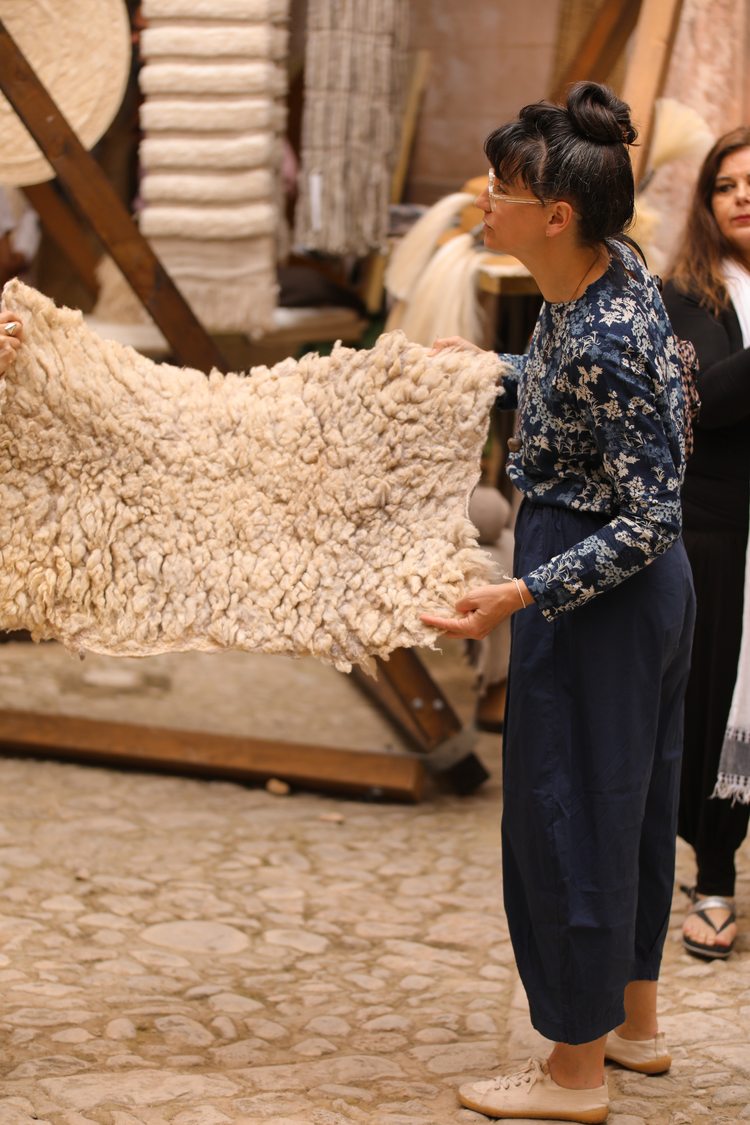
@rosapomar at XTANT Fibra 2023 by @leyre.lopezdelapaz


Europe is, fashion wise, a sheep continent. Its wide range of Nomadic or pastoralist traditions, its cuisine, a clothing history always closer to Pyrenean, Carpathian or Alpine wool than Chinese silk or Egyptian cotton. From the roman togas and greek tunics of great antiquity to the flemish mills that serviced growing 16th century protestant cities and the great coat makers of the Victorian era. Despite that, you wouldn’t really think so if you looked around today.

In our native Spain, a shockingly large amount of sheep wool is burnt in mountainous bonfires minutes after it is sheared. Without a domestic textile industry Merino wool, once so prized and sought after that it had its own European smuggling ring, must now be sold in bulk and at a cost so low that it’s not worth transporting.

This is a trend echoed across every corner of the continent.

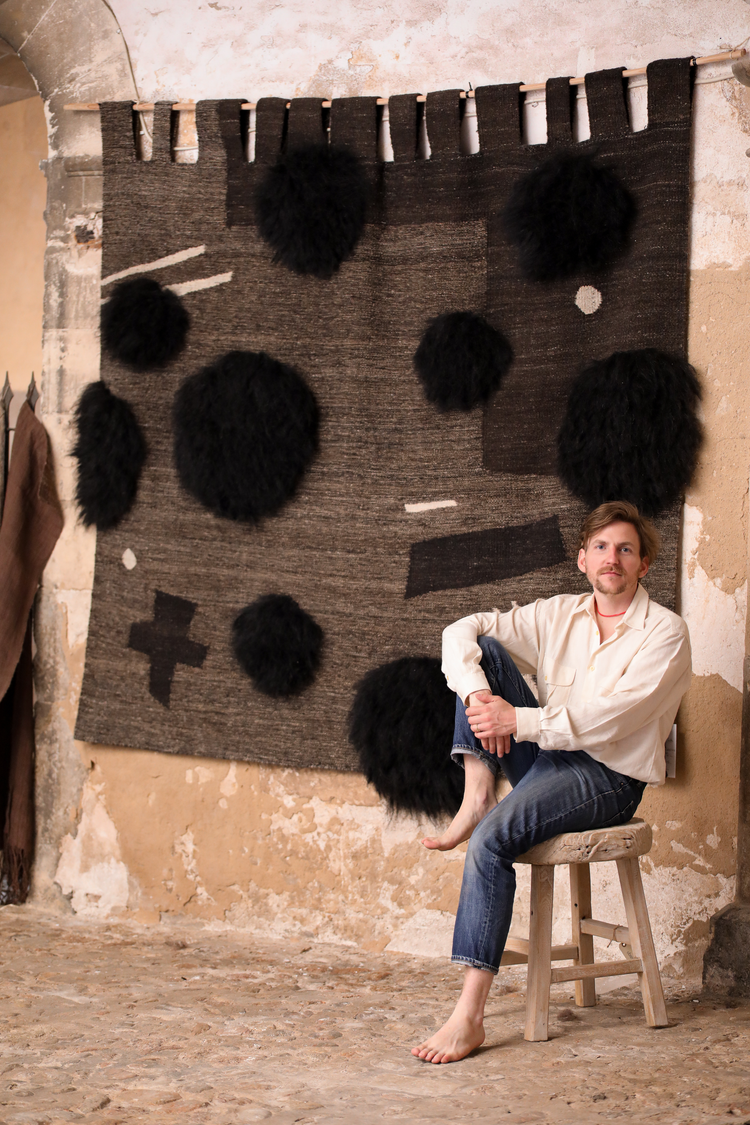
@studiodanielcosta at XTANT by @leyre.lopezdelapaz


European wool, if priced appropriately for farmers, would be absurdly more expensive, as its price would pay for the higher labour costs of a society with a higher cost of living. So governments who seek to preserve sheep flocks, are forced to either massively subsidise the purchases of foreign companies or let the entire industry die.

From an economic perspective this might all sound like reasonable market behaviour, but it is hard to overstate how abstruse this production pipeline is.

In the midst of an ecological collapse that the fashion industry plays an immense hand in, rather than use the readily available natural fibres that emerge as a result of our sheep existing, it is somehow more ‘sound’ to burn those fibres and instead import nylon or polyester clothes, which have been loaded onto cargo ships an average of ten times between design and retail.

In the process an entire industry and the people it employed are hollowed out, foreign workers are exploited, and the skills and traditions which have served as cultural touchstones and storytelling devices throughout the history of Spain are consigned to history.

Such is the trade-off for the low prices of fast fashion:

An externalisation of costs that corporations make society bare, creating an absurd system where the simple is more “expensive” than the needlessly complicated. In order to fully fix the roots of the Industry’s problems you’d, unfortunately, have to fix the affordability crisis first.

But, as that is beyond our scope, what can we do?

Amah Ayivi in the IOU traceable wool collection Photo by @travelight


Kavita has always been in throes with the disappearance of the wool industry. Since her first collection for United arrows in Japan in 2011, made exclusively from transhumance wool from ‘Made in Slow’, it’s been an underlying theme throughout her work.

And in the team’s own experiences with the question in Fibra 2023, it has become increasingly clear to us that to fix the dwindling wool industry and minimise its current waste, something different must take the place of the large textile mills of pre-war Europe.

Our point of view should be a little obvious in regards to what we think that ‘something’ should be. With the tragedies and excesses of traditional industry, its tendency towards an exploitative, transactional relationship with the labour it feeds off of, our preference would lie with small and medium production. Cottage industries and green factories made with genuine connections to their communities could bring a future fashion industry that is both artistic and doesn’t conjure up images of pollution or workplace accidents.

XTANT has been involved with the world of wool since its inception. Younger shepherds like Aina Lizarza, old school scouring and spinning facilities like Wool Dreamers, traceable merino wool sourced by Las Hidalgas, or the repaired English mills of Daniel Harris’ London Cloth co.

And this year, taking inspiration from the motif of NOMAD and the traditions of pastoralists across the world, we’re hosting a series of conversations, collaborations and projects within and without the XTANT name to bring forward the questions that must be raised and actions that must be taken to revive European wool and create this parallel industry.

So show up! …Please.

The making of Sekimori stones (関守石) with WARA

€150.00

 Shop 

Check out the new workshop!

Interested in a workshop and also want to support us? Do consider the VIP PATRON PASS. All patrons and the plus one they might bring are invited to the opening night party on the 8th.


XTANT, Calle Sanchez Pacheco 47, Callejon Local 1, Madrid, 28002, Spain

Unsubscribe